Genesis
I started playing Magic: the Gathering only a couple of years back. A friend had gotten a bunch of bulk and asked if I wanted to try this game along with some other people, who would later become some of my closest friends. He had set up a bunch of 60 card kitchen-table decks, which we played and often upgraded, and we had a great experience for a long period of time. We’d face off against another, review and revisit the bulk, talk about the game and there was this camaraderie amongst us all in that group. It’s become a foundational period of my life, and something I’ll likely treasure for the rest of it.
As my experience grew, quite naturally, I started to branch out from the limited scope of the original decks. That friend begrudgingly taught us commander, I acquired some precons, and we’d spend hours jamming games. We’d get together every weekend at our local library (they had a spare room, so they didn’t mind), and mess around, all in all having a good time. But things changed, as they are wont to do.
I fondly remember one fateful Saturday afternoon. That same friend from before had gotten us over, and we played his powered vintage cube, and it was an absolute blast. If you’re a relatively new magic player, you might only barely know what a cube is. It’s essentially a fake draft… I guess if you’re a relatively new Magic player, you might not know what draft is…
Essentially, a cube is a player-created set. You have a selection of cards (anywhere from 180 to 720, depending on how many people you want to accommodate) put together to create the draft experience for you and your friends to experience. I was making a joke before, but for those who genuinely don’t know (You’re out there, I just know it), in a draft, you create a 40-card deck from 3 packs of 15 cards. You take one card from a pack, hand the rest of the cards to the player next to you, and repeat until you have a functional deck. You usually do this with the pool of cards from the most recent Magic set, so a cube is a player-created set.
Anyway, as humans frequently do, categories are often ascribed to cubes. Pauper cubes are cubes with only cards of the common rarity; set cubes try to recreate existing magic sets; twoberts are cubes with 180 cards, designed for 2–4 players, rather than normal cube’s 8+; desert cubes require you to draft lands in addition to spells; bar cubes are cubes that try not to include tokens, counters or be sleeved — mainly for casual magic you can play at a bar; as well as vintage cubes, of which that friend’s cube was, which I want to talk about. Imagine playing Magic with the absolute best-of-the-best cards in its history. I’m talking about opening a 15 card pack containing Black Lotus; Oko, Thief of Crowns; Ragavan, Nimble Pilferer; and The One Ring, and building a deck around them. It’s a wild experience.
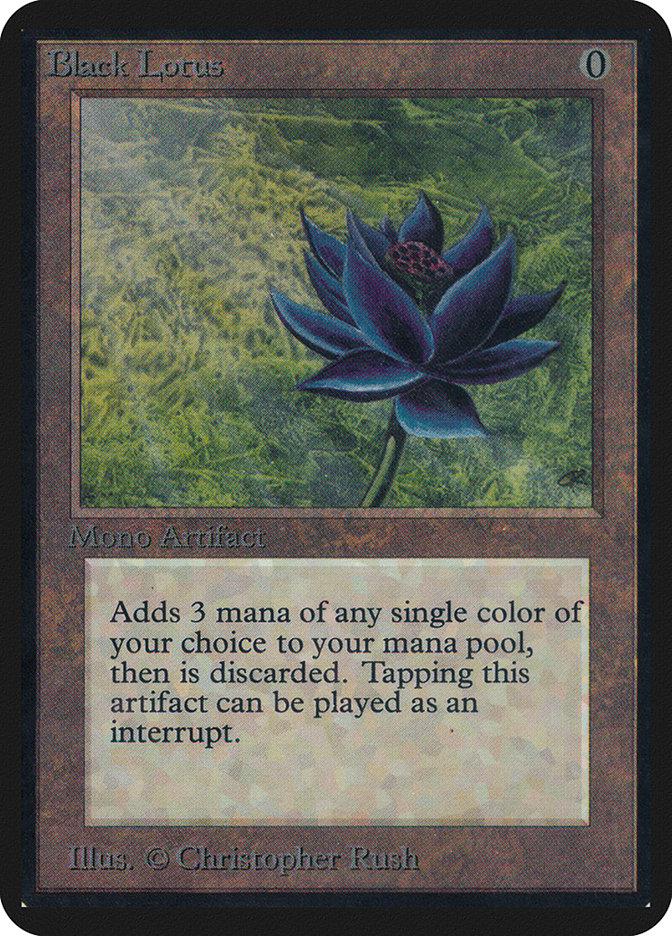
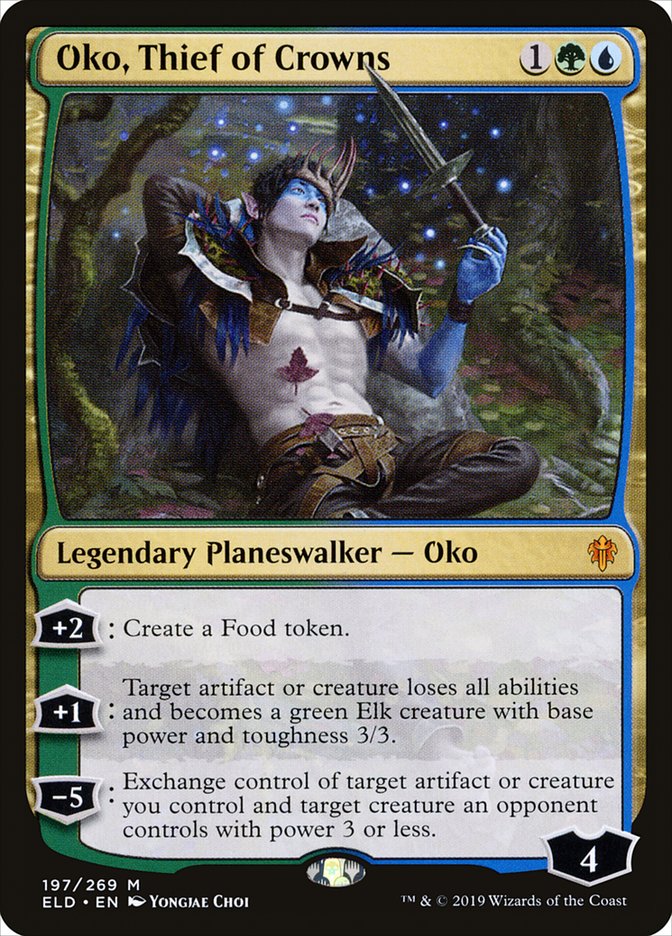
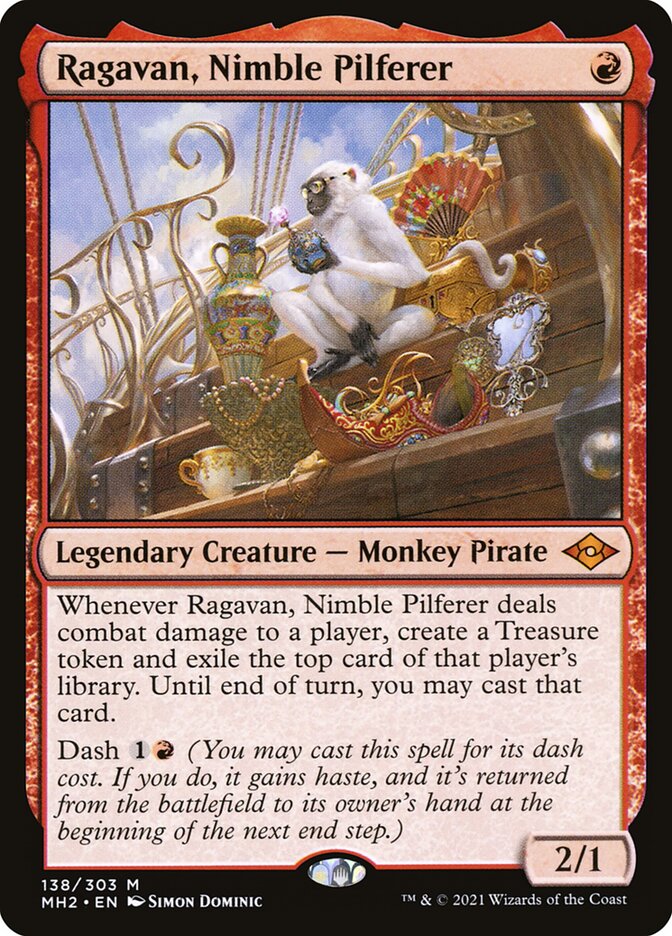
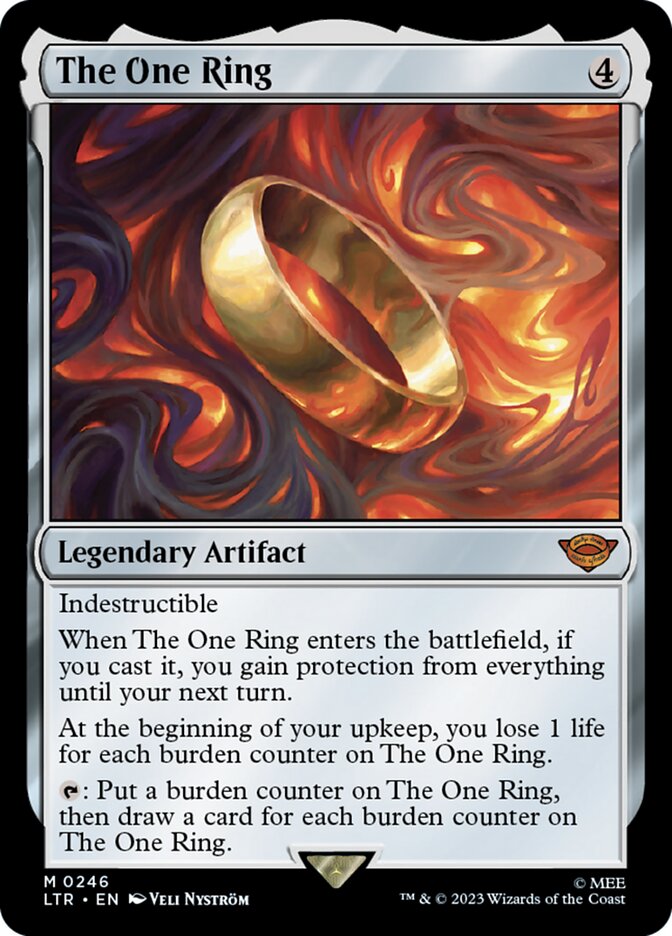
Playing that vintage cube was my first taste of playing Magic differently than constructed. Being completely new to draft (and really limited Magic in general, I was pretty new), my deck was barely in the right colors. I remember trying to make an Ephemerate deck, which went pretty poorly. I still had a blast, and really enjoyed the experience.
It would be nice to say that this event completely rocked the group to its core, and completely altered our world view, but this isn’t the case. We still proceeded playing commander, with the occasional 60-card kitchen table game, but we’d long since abandoned any attempt to update those decks.
The group shifted over time, people dropped in and out, and with that came exposure to the outside world. A couple of people who came in had been playing for years at that point, and this brought a shift amongst the playgroup. Once we had dropped the 60-card decks for the most part, Commander became the mainstay. We’d play commander with either precons or cobbled-together homebrewed decks. None of us really knew how to deckbuild in a cohesive way, and as time went on, more and more decks would have really high power, with low consistency.
Time passed, people phased in and out, and relations shifted and obscured. We would play weekly with upgraded precons, but it would feel hollow. Occasionally we’d have some greatly satisfying games where everyone had a ton of fun, but those grew fewer and further between. We’d discuss ways to increase the power levels of our decks, and occasionally we’d have some conversation about playing something else, either another format, or a different card game. Our weekly meetings have long since dried up. The group and I still speak, though much less frequently. I wonder what would have changed had we tried harder.
Retrospectively, one thing really strikes me. We never really attempted to break out of the play patterns we didn’t enjoy. We kept playing precons with questionable synergy (I realized while writing this, I don’t own any of the many, many commander decks I’ve brewed digitally over the years), and apathy kept growing. While we could all point to the problems — One deck would often dominate, not everyone was engaged, etc.— we never tried to fix these issues. There was always this sense amongst all of us, this sort of reverence towards the game. The game existed as it did, immutably — take it or leave it. We decided to leave it.
I apologize for the turn towards melancholy, but I hope it illustrates my point. The game has stopped being exclusively a game. It’s now a commodity, a curio, a collector's piece. My own experience is symptomatic of a larger trend. Commander is a lethargic format. It’s the junk food of Magic. You’re almost never challenged by the other players — it’s just based on vibes. There’s good and bad in this, but I think that — over a long period of time — this mindset isn’t healthy.
Sacrilege
Last week, I was waiting for a Zoom meeting and had some time to kill. I was thumbing through some common, picking out a few interesting ones. I pulled out maybe 10 of each color, and tried to throw together a cube.
Over the previous couple of days, I had been looking at bar cubes on some Subreddit or another. As I explained above, Bar cubes are an interesting form of Magic — A cube which avoids using tokens, counters and sleeves. This may sound odd, but it makes sense. It’s trying to create an environment where you can just throw down some cards at the bar or whatever and play Magic, no extras needed. It sounded like a strange, but appealing concept to me.
From the absolute start, our group had always prioritized protecting our kitchen table decks in sleeves and boxes. No, the cards weren’t worth protecting — they were crappy commons and uncommons, with maybe a bulk rare or odd powerful card from a pack someone had opened (I had a “Thassa, Deep-Dwelling” from an earlier attempt to get into the game). We were so obsessed with protecting the purity of these 10 cent cards, and when I thought about it, I was stricken with this sense of “why do we do this?”
If you are someone who, like me, has started this game within, let’s say the past 10 or so years, that idea might seem odd to you. “Of course, you protect the cards. Sleeves make it easier to shuffle, boxes help you transport them, and it’s worth protecting the card. They all have value, after all.” This was always the sense that I had playing the game. It’s not wrong, but looking back, I wonder how productive this line of thinking was.
We worship this game, spending hundreds of dollars on packs of meaningless cardboard, chasing after a fun experience. Once we shell out the money, we spend even more for binders, sleeves, and boxes to protect our “investment.” What other tabletop game do you do something like this for? It’s exhausting.
When I was going through the bulk that afternoon, I came across a card. Reach of Shadows:
This was a card that I have fond memories of. I remember one game we played in the early days of our little group. We were playing two-headed giant with our Kitchen-Table decks, and someone had dropped some game-ending threat (Knowing our group, it was probably Colossal Dreadmaw) so I played this little number in my Black Golgari Jank Combo Deck, destroyed it and the opponent who cast is was just staring at the battlefield, head in hands, completely reevaluating the entire game. I remember just sitting there smiling.
Looking at it now, Reach of Shadows is a pretty terrible card. It’s five mana for Murder that just straight-up doesn’t work on Eldrazi or most artifact creatures. I was thinking of putting it in my cube, but it just seemed under rate. It would be just slightly better if it cost one less to cast per the target creature’s colors.
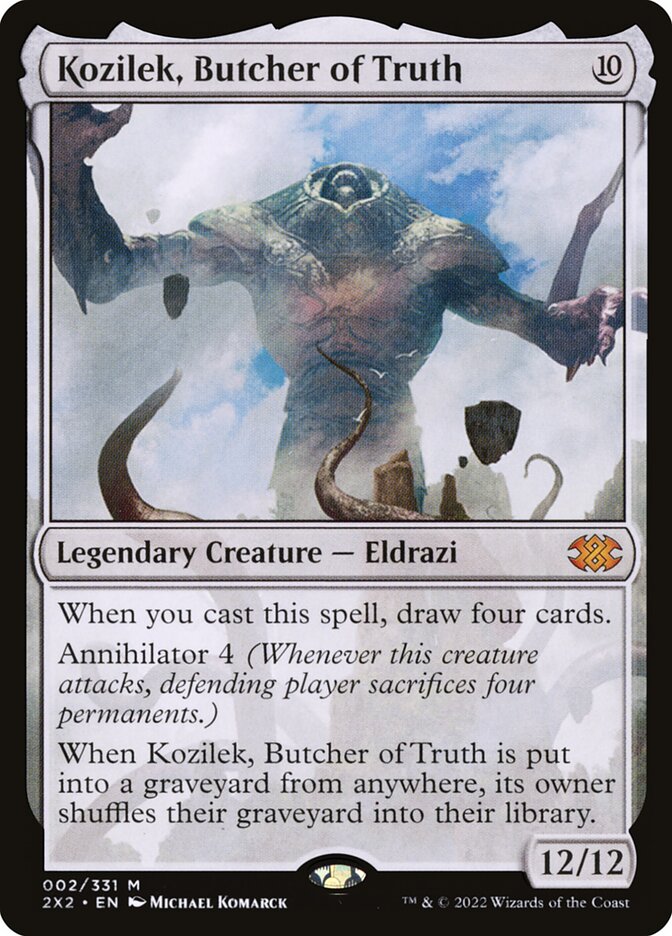

That’s when I decided that the card would say that… That’s right, I drew on the card.
If you have started playing Magic within the past 10–15 years, I have a task for you. Go grab a stack of maybe 40–60 bulk commons, I know you have some somewhere, as well as a Sharpie. Have them? Good.
Take the stack of cards and give ’em a couple good riffle shuffles, just like normal playing cards. Once you’ve done that, deal yourself out two cards face down next to each other and put the other stack away.
Without looking at either card, switch their placement if you like. Once you feel ready, pick up the leftmost card and look at it. Take the Sharpie, and draw on the card. Draw whatever you want; alter the card’s text in whatever manner you see fit. Give a 1/2 haste, flying, menace and trample; make the card cost no mana; draw a mustache on the art; just alter it in some capacity. This is a unique card that belongs to no one but you, has never been created before, and cannot be replicated. Put it aside.
Next, without looking at the second card, pick it up. Hold it in your hand and think about how it feels. Run your fingers up and down the card, and feel the sides too. Bend it a bit and experience the kinesthetic element of the card. Take it and hold it in your palm, with your non-thumb fingers on the long end. Without focusing your eyes on the card, hold it there for a moment and feel it. Next, crush it. Crush the card. Close your palm, applying pressure to the card, and feel it bend under your will.
Maybe now you can understand.
Rebirth
Since that one card, I feel that the floodgates have been opened. I am now the proud owner of a Sharpied Desert Bar Cube, which is nothing more than a pile of unsleeved straight-up jank thrown together in a box, and I couldn’t be happier with it.
The best part about it was writing on the cards, because it gave rise to a much more fun experience. Here are some of my favorites.
My goal with this cube was to turn pretty much unplayable cards into busted threats. As a rule, I tried not to edit mana costs much (Unless an X cost was needed.) I find that it’s not only difficult to do with a sharpie, but it will lead to more homogeneous card designs.
Now, I have yet to play this cube. I have no idea what other people will think when they open a pack with these four cards in it. That being said, this was a really fun experience, and there are times when I can’t resist the urge to sharpie a few more cards (A couple of days ago, I added a Morph package into the cube, in hopes of spicing things up.) It’s in a place where it’s at least playable (maybe) and I’m really happy with it.
My point for this article is pretty simple: Magic is your game, not anyone else’s. You should play the game you want to play, not the way the designers want you to play. As with a lot of things, you should be intentional about how you engage with, and evaluate how you engage with it. Commander had strangled the motivation out of my group, because we let it. I think that if we had all attempted to try something different, we might have had a better time. We just stopped feeling fulfilled by Commander, never really tried to do anything about it, and then things fell apart.
If your playgroup has ever expressed this sentiment, that Magic isn’t feeling fun, just know there are tons of other options. You can try other formats, like Standard, Modern or Vintage… If you’re a millionaire. I would recommend looking into some casual or grassroots formats like DanDan, Kitchen Table Magic, Value Vintage. But for my money, the best way to play magic is cube.
If you have a large enough group (6–8 players roughly) check out the Magic Online Vintage Cube, or maybe Andy Mangold’s Bun Magic Cube, or his 100 Ornithopters cube. Why not experience Magic in its formative days with an Alpha Cube? If your group is a little smaller, try a Battle Box, or one of Ryan Overturf’s twobert cubes. Maybe you want to experience Kamigawa: Neon Dynasty in a new light(Or try it for the first time) with the NEO: Reloaded remaster; or if you have a small army who wants to play Magic, check out Tom’s Commander Cube. Or maybe you want to create your own.
Some of you might check the cubes out, and consider getting them before checking the prices… and then gaping blankly at your screen. If you want to buy the Vintage cube right now, it would cost around $15,000. That Alpha Cube is around $48,000, while the Original Recipe Twobert sits at meager $1,500.
Even if you were to craft your own cube, it’s still pretty expensive. You can definitely make a cube out of bulk commons, and I encourage you to try, but not everyone wants to be forced out of a play experience they would enjoy, simply because they can’t afford the cards. If you want to shell out $15,000 for a cube, who am I to stop you? However, I would recommend not doing that, and instead feeding yourself and your family.
It’s for this reason that Proxies are 100% the way to go. You may scoff at this suggestion, but please, hear me out. Firstly, the cube is your environment. There’s no rules-committee who will bust down your doors and punch you in the face for not buying $15,000 worth of cardboard. Most people who you’ll play with will also understand the need for paying bills, over having an “authentic” experience. I would rather be able to play a game I love in a new and exciting way, over chasing after some false sense of authenticity.
In terms of getting proxies, the community agrees that the best way is through makeplayingcards.com. They have a great track record and, as well as good prices. The maximum amount of cards you can get is 612, and that’ll run you about $200 with the cheaper material. That’s $200 for any one of the $1000+ cubes plus one of the smaller cubes, such as the twoberts.
Also, if you’d rather play Commander, and your group is okay with proxies, then this is around 6 decks of any card for about $30 per deck (a bit more if you squeeze. You can probably get like 10 decks if you have some of the cards already). This will require a bit more buy-in from other people because humans tend to get stuck in thought patterns that confirm their own biases against proxies, etc. Proxy to your heart’s content, but I would recommend bringing a “normal” deck to appease the people who will really have a problem with it. Most people won’t care. Another tip would be to allow your proxied decks to be available for everyone to use, so that other people will feel better about it.
The community has created a great way to search and export lists to makeplayingcards.com in MPCfill.com. You can check out the Subreddit for detailed tutorials here.
At the end of the day, games are supposed to be fun. If you feel as though you don’t have power in the relationship between you and it, in actuality, you do have power, and you have a right to exercise it. If you’re currently content with your magic experience, then I applaud you for reading this far, as well as encouraging you to save yourself a few bucks by using “fake” pieces of cardboard instead of “real” ones.
I usually do Dungeons and Dragons content, but I felt the need to share a bit on this topic, because it’s something important to me. If you want to read more of my off-the-cuff thoughts about Magic, including an idea on “fixing” commander, you can check out my micro-blog here.
This blog is, and always will be, 100% human-generated.